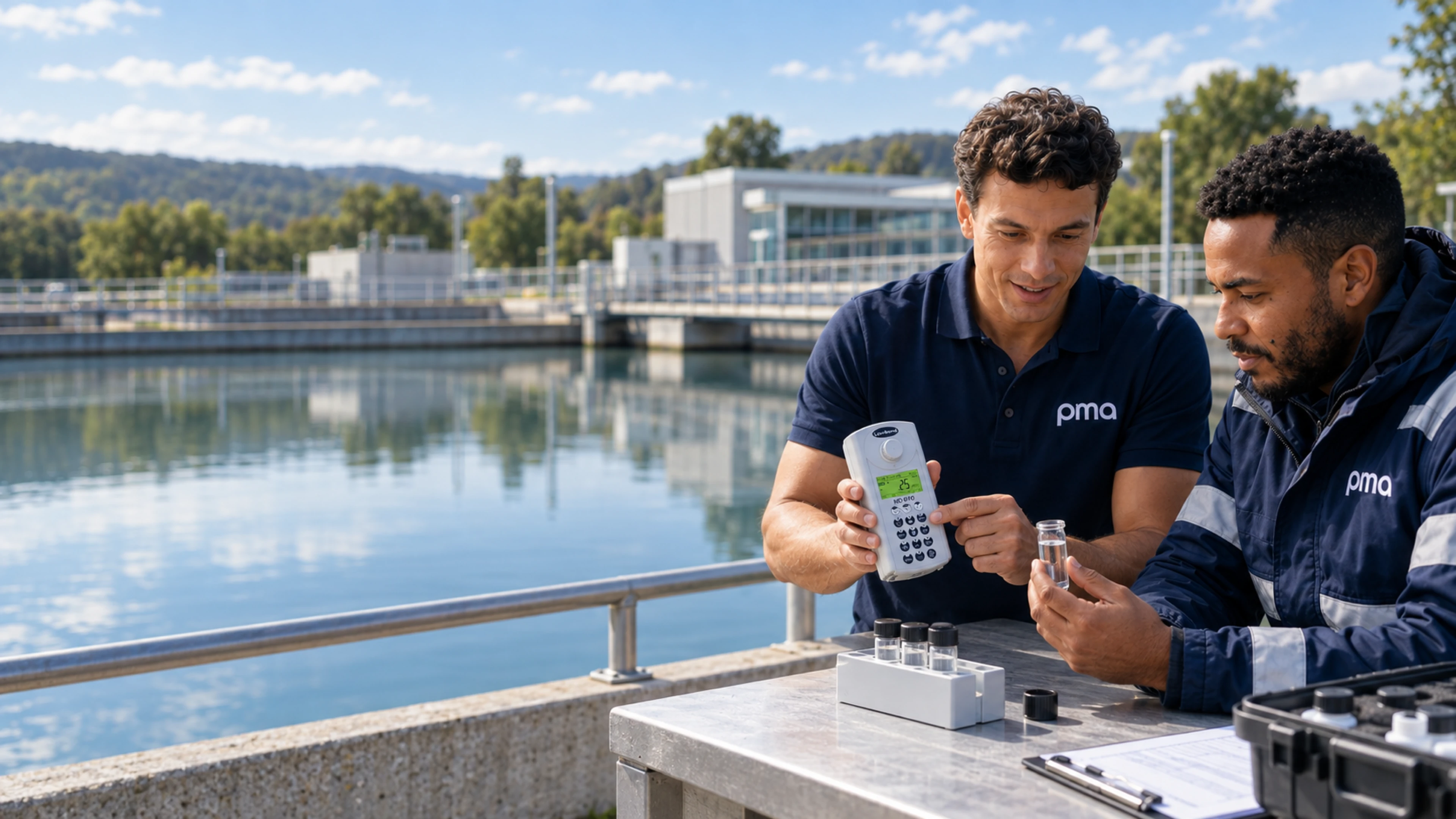
A chlorine result needs more than a number and the word “chlorine”. The record should identify what was measured, which method was used and when the sample was tested. Those details are particularly useful when a field result appears inconsistent with a process trend.
This guide covers practical points for photometric testing. It does not prescribe dosing or replace an approved drinking-water, process or discharge-monitoring procedure.
Confirm whether the task is free or total chlorine
Free and total chlorine are different measurements. Select the correct instrument programme and the matching reagents for the required determination. Do not use a free-chlorine result as though it were a total-chlorine result, or assume that a reagent packet is suitable because its name includes DPD.
The programme, reagent, sample volume and timing form a method. Check them together before collecting a sample. Where more than one chlorine method is used on site, label the equipment and records clearly enough to prevent a mix-up during a busy shift.
Plan collection and measurement together
Chlorine samples need prompt handling under the relevant method. Plan a safe working position and have the instrument and consumables ready before collection. Record both collection and measurement times so an unexplained delay is visible in the result's history.
Reaction time is method-specific. Use the programme's prescribed timing and mixing instructions rather than transferring a familiar routine from another reagent or range. If a timing step is missed, document it and follow the procedure for repeating the test.
Give cells and blanks their own checks
Inspect the sample cell and clean it as directed. Confirm the specified fill volume and remove droplets or fingerprints from the outside before reading. Use the blank required by the method and record relevant sample colour or other interference concerns.
Carry-over between tests can matter. The North Carolina laboratory procedure for free-chlorine DPD analysis explains why dedicated free- and total-chlorine cells can be important. It is a technical example from that jurisdiction, rather than a substitute for a UK site's approved procedure.
Investigate disagreement before changing the process
Compare the measurement basis first. Are both records free chlorine? Were samples taken at the same point and time? Were the programme, range and reagents appropriate? Did the required quality checks pass?
Retain unexpected readings with their observations. A repeat should be identified as a repeat, with a reason. Where an instrument reports an over-range result, use only the investigation or dilution steps permitted by the method. Do not treat the upper display limit as the measured concentration.
For a suitable portable instrument, start with our photometer product information and discuss the exact method with PMA. PMA News provides context on the wider field-testing range.
Frequently asked questions
Are free and total chlorine interchangeable?
No. Identify the required determination and report it explicitly with the result and unit.
Can one reaction time be used for every DPD test?
No. Follow the instructions for the selected reagent, programme and range. A different method may require different handling.
Does zeroing prove that the complete test is working?
No. Zeroing supplies a reference. Reagents, sample preparation and the required verification checks still need attention.
What should I send when asking about an unexpected result?
Include the sample point and times, programme, reagent details, unit, checks and observations. Contact PMA with that information to discuss the application.